
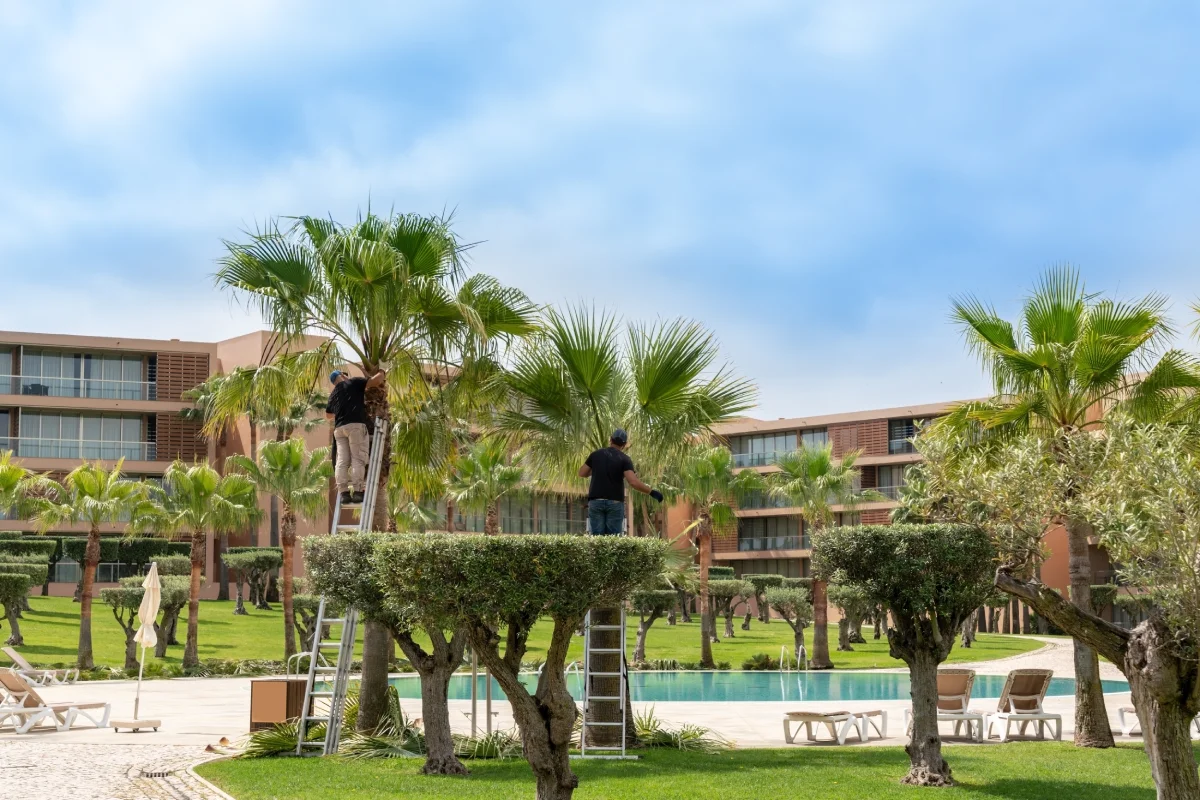
How to Prune a Palm Tree and Why Is It Important
Palm trees are a distinctive feature in many landscapes, offering a touch of tropical elegance. To keep them looking their best and to ensure their health, proper pruning is crucial. It helps maintain the tree’s structure, promotes healthy growth, and prevents potential hazards. Here’s a quick guide on how to prune a palm tree and its importance.
First: Why Is It Important?
The health enhancement of palms is very significant, which is why pruning them will make a difference. Pruning removes dead or diseased fronds, which can harbor pests and diseases. This helps to prevent the spread of infections and maintains the overall health of the palm tree. However, it’s not just about health. Regular pruning assures an aesthetic improvement, which will make your palm tree look neat and well-kept. By removing old, brown foliage, you enhance the visual appeal of the tree, making your landscape more attractive.

Pruning your palm trees is also a safety measure: Since dead fronds can fall unexpectedly, posing a risk to people and property below, regularly pruning them reduces hazards, making your garden a safer place for everyone.
Furthermore, removing excess fronds allows the tree to direct its energy towards new growth and the development of a robust root system, a commonly overlooked reality. The rule is simple: The less excess of fronds, the healthier and more vigorous the tree.
So, Do You Know How to Prune a Palm Tree?
Make sure you know these tips when you decide to prune your palm trees, even if you hire a company to do the job. It’s always a good idea to understand the basics, especially when it comes to your Garden:
- Know when to prune. The best time to prune palm trees is during the growing season, usually late spring to early summer. This timing helps the tree recover quickly and reduces the risk of damage from cold weather.
- You must know which tools you need. Use sharp, clean tools such as hand pruners, pruning saws, and pole pruners. Sterilize your tools before and after use to prevent disease transmission.
- Identifying Fronds to Remove. Focus on removing brown, yellow, or damaged fronds. Healthy, green fronds should generally be left alone, as they are essential for the tree’s photosynthesis and overall health.
- Pruning Technique. Begin by removing the lowest fronds, cutting close to the trunk without damaging it. For larger fronds, make a small notch on the underside near the base to prevent tearing.
- Removing Seed Pods and Flowers. If your palm produces seed pods or flowers, consider removing them to help the tree conserve energy and maintain a tidy appearance.
Avoid Over-Pruning. It’s important not to remove too many fronds at once. A good guideline is to leave at least two-thirds of the canopy intact. Over-pruning can stress the palm and make it more susceptible to diseases and pests.
Post-Pruning Care
After pruning, keep an eye on the palm for any signs of stress or disease. Ensure it receives adequate water, particularly during dry spells, and consider applying a slow-release fertilizer to support its recovery and continued growth.
Spruce Up Your Palm Trees With PMT!

At PMT Landscaping, we are experts in tree care service. We ensure your garden stays healthy and always looking beautiful under our bright Orlando sun. Our team of professionals is dedicated to providing the highest quality of care for your trees, from meticulous pruning to safe tree removal. Trust PMT Landscaping to keep your garden in top shape, enhancing both its aesthetic appeal and safety. Contact us today for all your tree care needs and experience the transformative impact of expert attention and care.